

On-site generation
Explore how suitable roof space could generate electricity for your operations.
Manufacturing
Plan solar around your production, your premises and your future demand.
Assess my factory →
Manufacturing sites can use electricity in very different ways. Day shifts, continuous production and seasonal workloads each create a different profile. A useful solar assessment considers the roof alongside machinery, building services and the timing of production.
Explore how suitable roof space could generate electricity for your operations.
Compare generation with working hours and actual demand.
Include growth, new equipment and changes to your site.
A tailored assessment starts with how your business uses electricity. These are useful areas to discuss:
Share the operating hours and typical loads of major equipment. Peak demand alone does not describe how much solar generation a site could use throughout the day.
Single-shift and round-the-clock operations require different assessments. Account for weekends, shutdown periods and seasonal changes when reviewing consumption.
Ventilation, cooling, compressed air and lighting can contribute to ongoing demand. Consider planned efficiency improvements so a proposal reflects future consumption.
New equipment or additional production lines may change the brief. Include planned expansion and any electrical infrastructure work in the early discussion.
Bring the building and energy information together before a system is specified. A site review should identify where professional checks or further information are needed.
Tell us about your site and energy use.
Generation and demand do not always align. Compare operating hours, consumption and the proposed solar output before deciding whether storage belongs in the design.
A useful proposal explains capacity, controls and any site constraints. Clarify how the system would operate and who will maintain it.
Explore battery storage →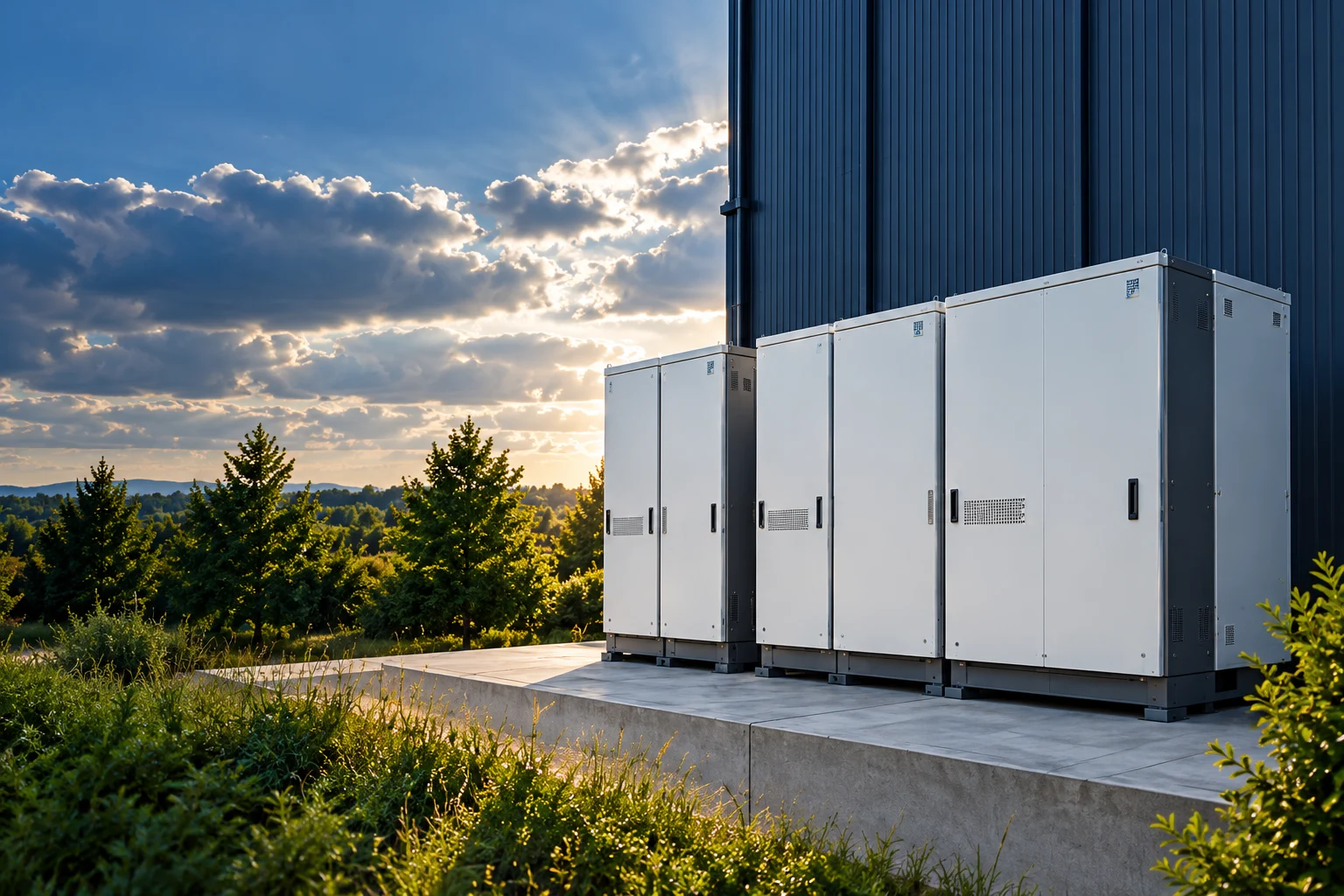
Compare proposals on their scope and assumptions. Equipment, access, electrical work and the generation your site can use all affect the business case. Ask what is included, what may need further investigation and how future changes have been considered.
Assess the building, roof and energy use. Identify the checks and information required before a design is confirmed.
Review equipment, generation assumptions and how the system fits your operations. Agree responsibilities and any exclusions.
Confirm permissions, grid arrangements, access and programme. Identify planned interruptions and handover requirements.
The assessment should compare solar generation with consumption across all shifts. Panels generate during daylight, while evening and overnight demand may need a different supply mix. Storage should be evaluated against actual consumption and operating requirements.
Discuss its age, condition and any planned repairs before deciding on an installation. Structural suitability, access and the remaining roof life belong in the assessment. Coordinate necessary building work with the proposed solar programme rather than treating them as separate decisions.
The impact depends on access, roof works and electrical arrangements. Ask for a programme that identifies vehicle movements, work areas and any planned power interruptions. Agree how the contractor will coordinate with your site team and operating requirements.
Storage is not necessary for every project. Its suitability depends on when you generate and use electricity, your tariffs and the proposed controls. Compare the assumptions and costs of options with and without a battery before selecting a system.
Recent electricity bills, available half-hourly data, the site address and roof information are useful starting points. Share ownership or lease details, operating hours and planned changes. You do not need a final design before requesting an initial assessment.
Start with your site and energy use. Share recent bills, operating hours and your priorities so the next conversation has a useful starting point.